A moon shot and talking about what matters
and a book to get you talking
as seen on:








Talking about what matters
Last year, I had a chance to sit in on an ethics seminar at the School for Ethics and Global Leadership in Washington D.C., a truly exceptional and highly competitive semester program for kids in their junior years of high school. The Head of School, Noah Bopp, who exudes energy, passion and commitment to both kids and education in all that he does, led the conversation and began by asking the students— about 24 of them in a semester— to stand. The topic was the Israeli Palestinian conflict. One student in the group wore a hijab. Another a yarmulke. Clearly the topic held deep personal relevance to some of the students in addition to its significant political weight.
“Which of you come from schools which talk about this issue?” he began, and asked the kids to sort themselves on one side of the room if their schools engaged in the conversation, and the other if they did not. Nearly every student moved to the “did not” side of the room. Next he asked them to sort themselves based on how much they knew about the issue. The students spread themselves more uniformly. Then he asked students from various parts of the classroom to share their own experience and knowledge. Finally, they moved into a lecture on the history of the conflict, with an invitation to interrupt and disagree at any time.
It’s sobering— the unwillingness and even inability to constructively engage with challenging issues even within educational settings. Meanwhile, most educational setting exclude ancient wisdom from conversations as a matter of either policy or paranoia— it’s sometimes difficult to tell which. More and more, it’s likely that this wisdom is excluded because the teachers themselves do not have an understanding of or experience with it, and because the way they were educated was to sanitize anything approaching values.
Interestingly, this very issue— that of recovering ancient wisdom, that of what constitutes a good life— is present even in business conversations. From the Brooks Brothers (does anyone else call them that?) Arthur Brooks whose new book The Meaning of Your Life addresses exactly this area, to David Brooks exploration of The Second Mountain and the eulogy virtues, to Notre Dame’s new Virtues and Vocations Conference, to the Jubilee Center at the University of Birmingham’s Jubilee Center for Character and Virtues.
A book to get you talking
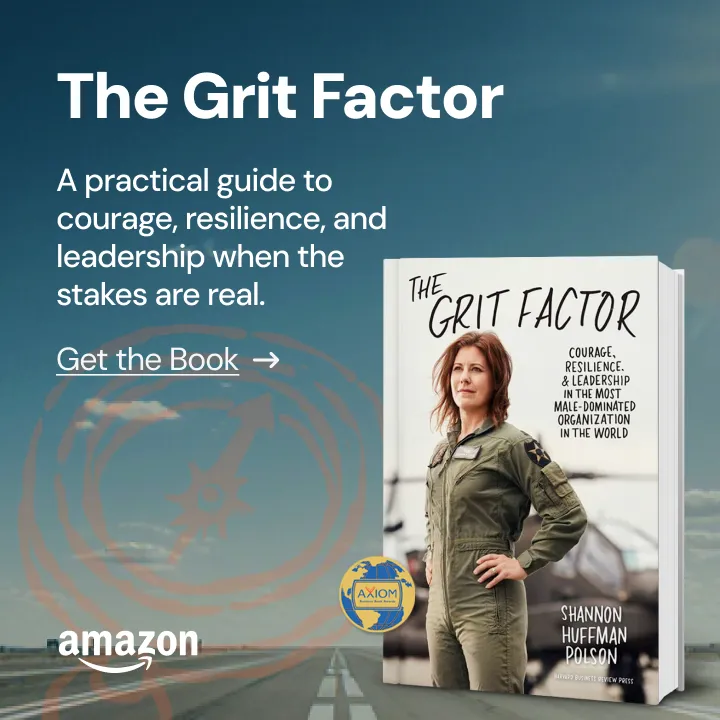
Because of this, and because it’s of near existential importance that we are having these conversations, I put together a book of prompts for families (or teachers, or lunch conversations) to use to start. I’ve called it Family Dinners: 100 Conversations on the Good Life, and it draws from every major ancient wisdom tradition as well as classical literature. It’s not intended to be exhaustive, but each topic offers two short original passages and three questions. What it might do it get us thinking and talking again— and ideally looking further into full and alternative texts to add even more texture and depth. (if you find it helpful, please consider leaving a review and share it with others!)
To be frank, I want in on this conversation we’re having at every level, bringing back the importance of virtues and values (not just your own), the honoring and acknowledgement of faith, and moving together toward CELEBRATING what we have in COMMON (virtues, values) while continuing to honor differences. I want us ALL in on this conversation, willing to lean into places we find connection and others where we might have more to understand.
My kids are going through school at the inflection point, but institutions turn like battleships, and we have fought for them tooth and nail— against the technology that schools said they wanted (one tablet per kid— clearly a terrible idea from the beginning) and all rapid-fire adoption of technology without consideration, against the dumbing down of school materials, against the utter dearth of any contemplation of universal truth and values at all in the name of critical pedagogy. They won’t benefit from the turning tide, but we’ve been fighting for it, and still will- we still MUST, because they are still part of national systems that don’t believe in virtues and values and thus never even approach formation of children in society which must be the charge for every one of us.
Meanwhile, companies and institutions who have quietly stayed the course, often under the radar, thrive with this kind of a focus. My conversation with Dave Whorton, the founder of the Tugboat Institute, focuses exactly on these things, defining values of Evergreen Companies which have to be met for membership and which have led to member companies extraordinary success.
What is clear is this: any thoughtful person does not have the luxury in our environment to simply rely on institutions or social constructs to deliver or support values. We must each do our OWN work to determine our values (this is part of the work in the first two modules of Leading with Purpose at The Grit Institute) and then stay true to them, no matter what.
Watching tides turn
This past weekend I visited with a friend whose parents were visiting from her home country of New Zealand. Her incredibly impressive mother reared four children and discussed the change in social norms over all four of their births.
When the first was born, she nursed her child, but none of her friends or acquaintances were nursing; it was all about formula. Moreover, she wanted her husband to be present for the birth, which simply wasn’t done. Any sane person knows not to argue much with a woman about to give birth, and she prevailed.
For the second child, she said she noticed one or two other women nursing as she did, though bottles were still the norm. By the third— and certainly the fourth— nursing was expected, almost to a fault.
And as for the births? The nurses demanded her husband stay with her in the hospital room.
Social norms had changed. Her values had remained the same, but required her to fight for them when they were in conflict with society.
and another…
When our children were young, I refused to let them play games online or have access in any way to technology. The backlash came from my own family as well as the quiet turning away of others.
Today, the evidence is in. Thanks to Jonathan Haidt (and countless others), the screens that were brought INTO classrooms over the past ten years (in the name of progress) are now being removed— around the world. Why? Because literacy rates are lower than they’ve ever been. Reading has become near extinct. And we’re starting to wake up to the obvious truth that the decision to ever let this happen was a terrible and even dehumanizing thing. On a podcast conversation with Cal Newport, Arthur Brooks talks about the concept of the Matrix (from the movie of the same name): “We are already in the Matrix,” he says.
Byung-Chul Han of the University of Berlin agrees. In his excellent small book The Disappearance of Rituals, sees the neoliberal move toward authenticity (without regard to what brings us together) as the ultimate productization of the human: “The neoliberal regime exploits morality. Once it is able to present itself as freedom, domination is complete. Authenticity is a neoliberal form of production. You exploit yourself voluntarily in the belief that you are realizing yourself…the whole person is incorporated into the production process.” (p. 18)
For those of us with kids now, or anyone employing young people now, if you care about the minds of your children or those around you, you’re going to have to fight against the still strong forces preying on the minds of all of us, and do another significant part of work to repair the damage. Fortunately, by redirecting repeatedly to analogue experience, this can be fun for everyone. But it doesn’t allow you to ever let up your guard. You can’t wait for the tide. You have to start swimming now. Because your own life, the lives of those who rely on you, the lives of those you love, is now.
The moon shot happening NOW
In July of 1969, Buzz Aldrin and Neil Armstrong became the only human beings to walk on the surface of the moon. Command Module Pilot Michael Collins remained on board to orbit while Aldrin and Armstrong collected samples from the moon.
Last summer in Banff, our family had the opportunity to meet Victor “IKE” Glover, one of the four astronauts aboard Integrity, scheduled to go behind the dark side of the moon in three hours. Even getting TO the gravitational pull of the moon is a first in decades. The moment you start to dig into what exactly they’re doing, you see how mind blowing were previous missions— and how utterly mind blowing is this one.
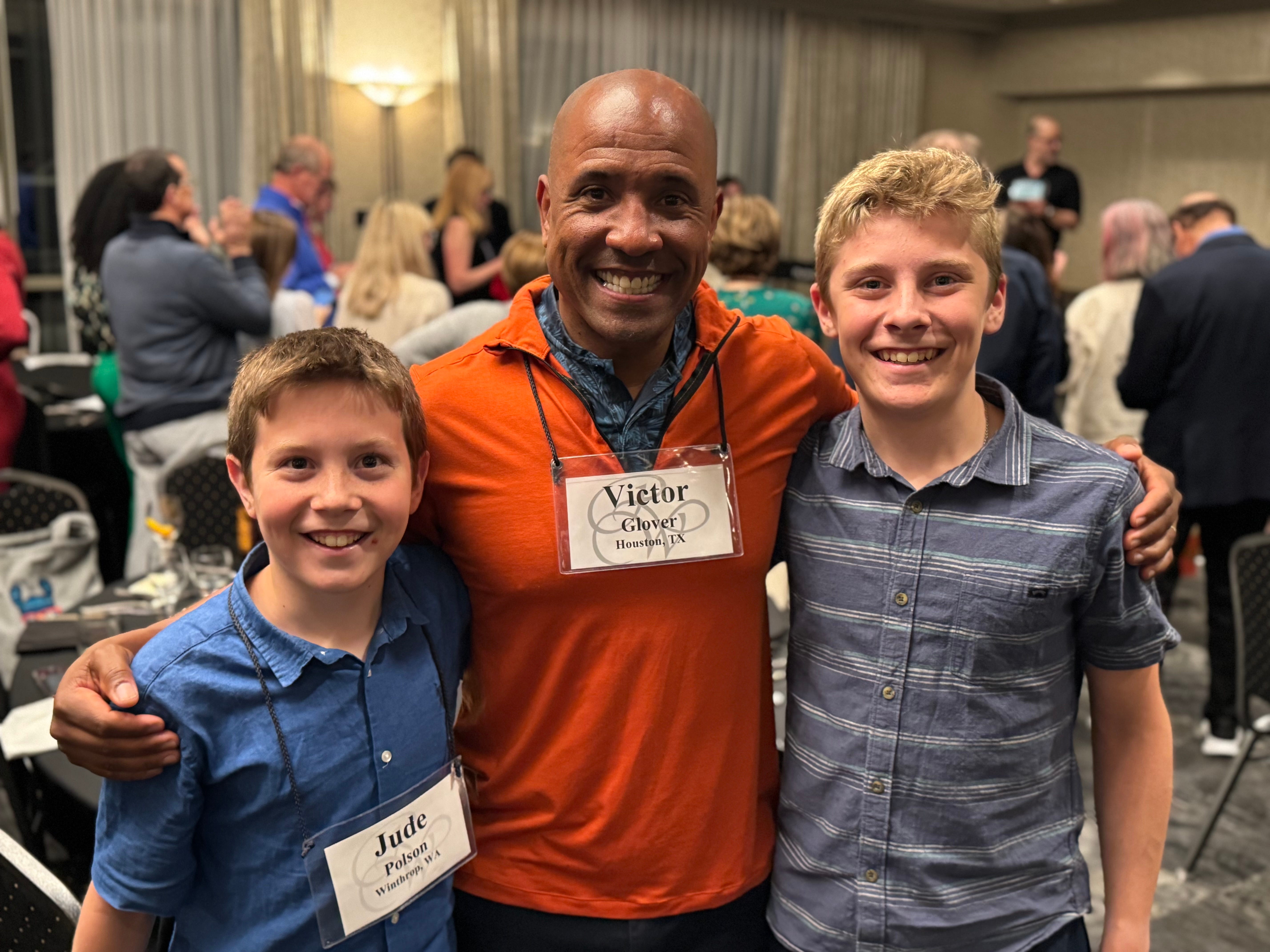
Our two boys with Astronaut Victor “Ike” Glover last summer
This mission includes four of the nation’s best in their respective fields, including the first black astronaut (IKE) and first woman astronaut to travel so far. The mission commander is also a woman. But what they are all FIRST is professionals that are the best in their fields.
And their love for their work is evident. Christina Koch, one of the mission specialists on board, wants this mission to be forgotten, just a part of the larger effort to better understand our incredible universe.
What is also evident is their faith. IKE asked us to pray for them as they went around the dark side of the moon. He is a man of deep faith, and shares it publicly. I want more of that. Not the mandate— that is where problems come in. But the living into what is bigger than ourselves. Not looking for ourselves, but finding ourselves in service to something bigger than ourselves (see the post on transcendence.) This is a part of all of our space exploration, from the idea of exploration and advancing knowledge, to reading from Genesis on an earlier mission, to Buzz Aldrin taking communion before walking on the moon. Whether or not to it is your tradition, honoring each of our traditions and holding the sacred with reverence is part of honoring what humanity has always been.
(did you catch my conversation with Astronaut Sunni Williams? Check it out here!)
I want us to return to the ancient wisdom of our species, through continued advances in science and the humanities to rediscovering philosophy and sacred scripture in new ways. I want for my own children to wrestle with the big issues of what it means to be human, and to live into the best of that humanity, the good life and the common good— not to be sucked into the vacuum of social media and mind-numbing technology. Technology is a tool, and can and will be an important and powerful tool, but we have to guard against its misuse both personally and organizationally, and guard against anything that in any way diminishes our own power to think, and think deeply, critically and well, while honoring all parts of what it is that makes us truly human. (A related post is here).
With love, to your humanity and to your grit, as always,
Shannon
Follow on LinkedIn, Youtube and Instagram!
Apple | Spotify | Amazon | YouTube
Become the person who shows up stronger, clearer, and more purposeful — no matter the challenge.
Transform your leadership, decision-making, and personal resilience for stronger, more purposeful leadership and resilience organizations.