The question to ask this new year
and my first books of 2026
as seen on:









In the past,
I’ve joined those who have started the New Year with a word. This year, I came across someone’s suggestion to do a word search, and take the first three words I found into the new year (I did the search but can’t quite remember what the words came out to be). For 2026, though, I’m starting with a question.
Perhaps a question is implied when you begin with a word (eg. how can I live into gratitude? What is important about courage?) but I’m inspired to own the specificity of a question in its entirety.
This question: “What is freedom for?” would be a good one for the places we find ourselves politically, but I don’t mean it that way at all. I mean it in the broadest and most all encompassing sense— what is it we are meant to do? What is it I (we) am meant to do? If I am and we are by most metrics to be considered free, does this imply an obligation? (I believe that it does). And if so, what is that obligation in our work and in our lives?
This is the question, of course, of purpose, though purpose may be very much alive external to the specifics of what we consider freedom. What feels urgent about living into this question is about our humanity, which has everything to do with how it is that we lead, how we work, how we love, and how we live.

“What is freedom for” is the question asked by Jacob Needleman as reported by Christian Wiman in his outstanding essay in Harpers, “The Tune of Things.” Wiman is referring to Needleman’s memoir What is God, in which Needleman notes that modernity is about a realization of the freedom from, and that the necessary next age must be “the call of what freedom is for.”
The first episode of the New Year on Ezra Klein’s podcast asked an even more fundamental question, as he spoke with Buddhist teacher Stephen Batchelor, whose new book Buddha, Socrates and Us: Ethical Living in Uncertain Times. He suggests extended meditation on this question: “What is this?” In the Christian tradition, we believe the Christmas and Easter seasons answers that question. The nativity tells Christians around the world that we live in a world suffused with divine light and love of the deepest, most human and most sacrificial kind. It is our work to see, and to honor and emulate that, even and especially when it is difficult to see. Whether we are at work or at home, the opportunity, the responsibility, is the same.
As we put away the wrapping paper and move into a new week and a new year of work, this reflection means everything— if not about the work that we are doing, then about how it is we do that work. For what (and for whom) do we do our work? And how might these foundational questions either redefine that work, redirect it, or infuse it with meaning?
In this question is an understanding of gift, a sense of gratitude, and a need to know, a yearning for how it is that we live this “one wild and precious life,” an intimation that freedom itself may mean something other than how it has been defined. In the last months—perhaps even years— I have become increasingly uninterested in any consideration that does not have the humility to consider the mystery which is very. much a part of all of human history. I encourage you this year: stay humble. Stay open to what might be possible. Remain open to what you do not and cannot know.
Before we can write resolutions,
articulate goals, or even envision a year or a life ahead, this is the question we must answer for ourselves. And to answer this question requires a great deal of us— especially the “us” of our time and place when we have allowed all sense of what is good and bad, all sense of values, to fall away under the smooth saccharine poison of relativism.
I’ve long been a fan of Monk Manual, and founder Stephen’s approach to life and work, and this year purchased his Life Atlas as well, which aligns closely in its format to the work we do in Leading with Purpose at The Grit Institute. In support of the open journaling page for Life Goals is this quote by Thomas Merton:
“If you want to identify me, ask me not where I live, to what I like to eat, or how I comb my hair, but ask me what I am living for, in detail, ask me what I think is keeping me from living fully for the thing I want to live for.”
What it is we should be living for is the answer to the question— why freedom?
The first necessity is to know why freedom is important for each of us, and then to act on it.
To do this requires identifying our values— those values we’d sacrifice anything for. And then arranging our lives to live into those values.
What are you living for? How are you meant to use the gift of your freedom?
Start from there. And then live into it, one thought, one decision, one action at a time.
How to begin? A few thoughts and an exercise for paid subscribers below.
Happy New Year to all- with all my very best, and to a great 2026 together!
With love and to your grit,
Shannon
PS. My first books of 2026:
The End of the Affair, by Graham Greene— after finishing The Power and the Glory I couldn’t resist.
Sophocles’ Antigone, because my 10th grader is reading it, and so we can discuss. Also: an incredible heroine in a play from the 5th century B.C.
The Prophetic Imagination, by Walter Brueggemann, an important thinker in my life.
Primal Intelligence, by Angus Fletcher, because our humanity is of primary importance even and especially in this time of technological disruption and AI
Ready to engage more deeply with the things that help us answer the question: what is freedom for?
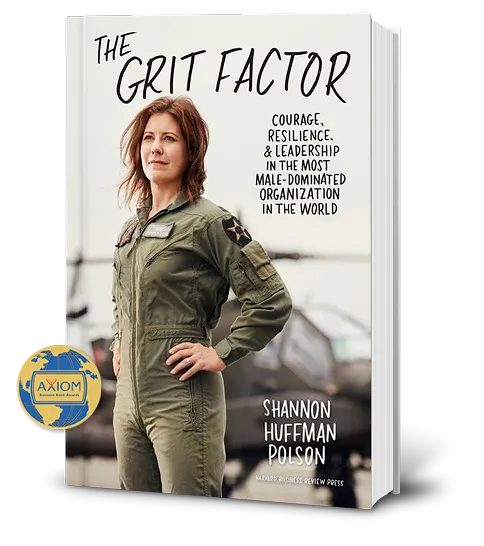
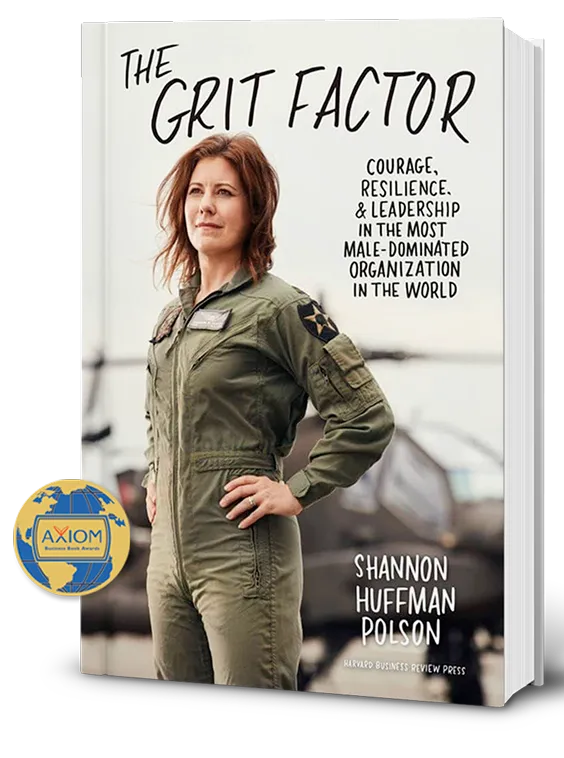
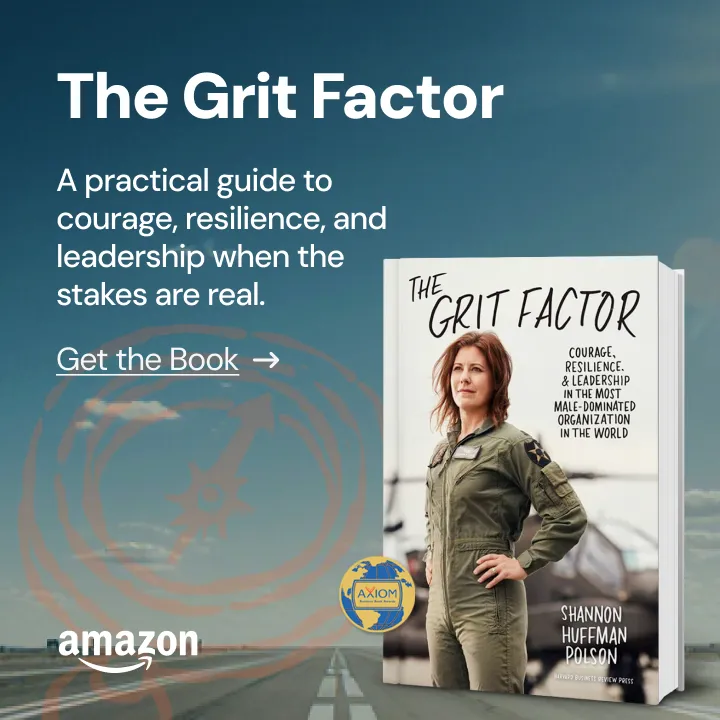
Let’s start with chapter 1 of The Grit Factor— going back to our journey lines.
As we look over our journey lines, and work through the exercises at the end of Chapter 1, you begin to see the values that matter to you— that you have shown and lived into mattering, that you may still want to live into as mattering.
Now let’s take it a step further.
Write out this statement.
I am here to do __________________________ so that_______________________.
This question connects directly to a value to which you are connected, to which you are committed, to which you understand that you must do whatever is necessary to bring it to being.
Now post this above your computer, or wherever it is that you do your work. Let it guide you. Consult it when you are unsure of the right direction, the right decision.
If this seems like a difficult sentence to achieve— you’re doing it right. You may need to live into this for a few days or weeks. The goal is to anchor this to your deepest values, your core reason for being.
Ideally, you can find that you are doing something aligned with that deepest of values (there may be and likely is more than one), and if you are not, that’s your prompt for the new year: ensure your work and life is in alignment with those core values.
Apple | Spotify | Amazon | YouTube
Become the person who shows up stronger, clearer, and more purposeful — no matter the challenge.
Transform your leadership, decision-making, and personal resilience for stronger, more purposeful leadership and resilience organizations.